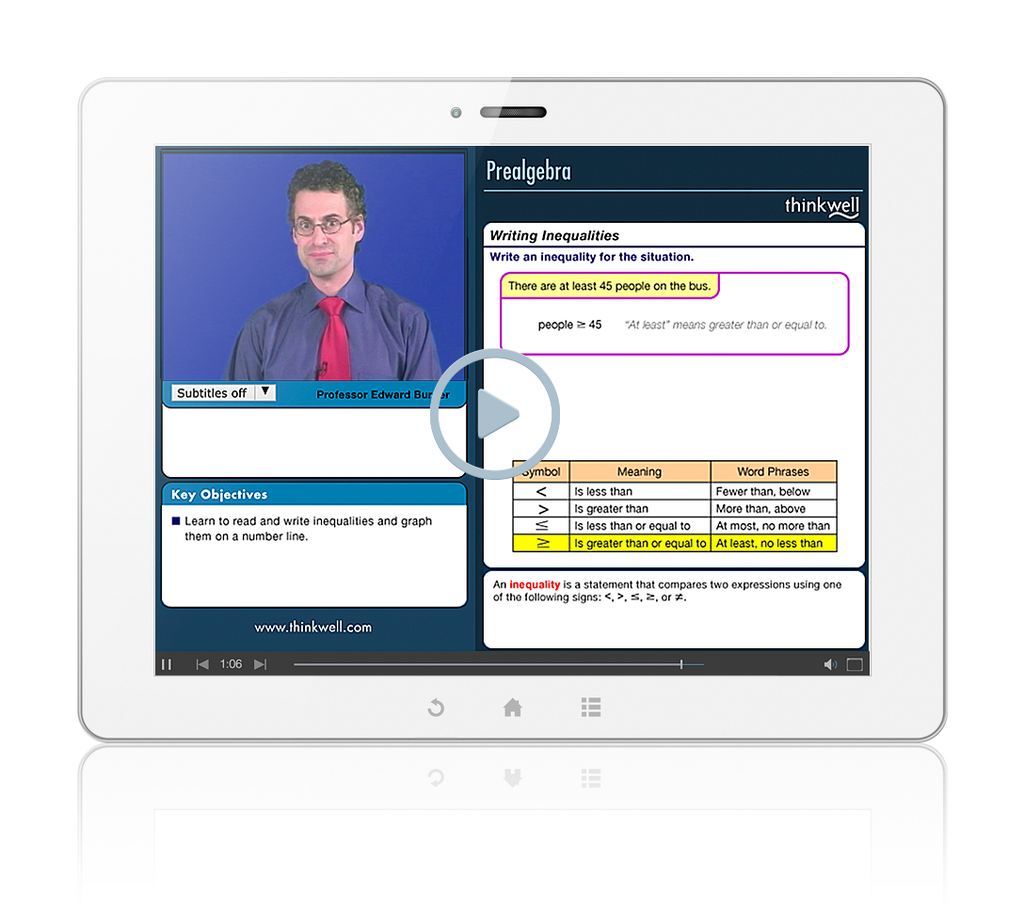
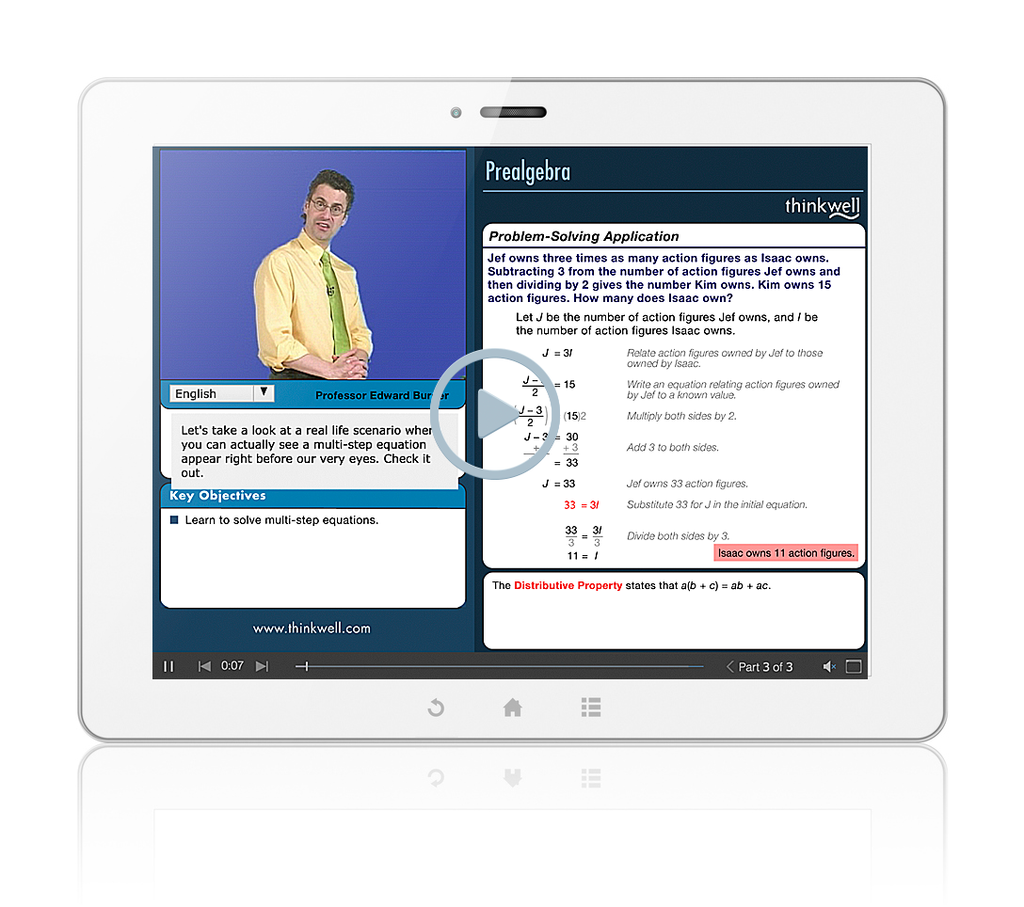
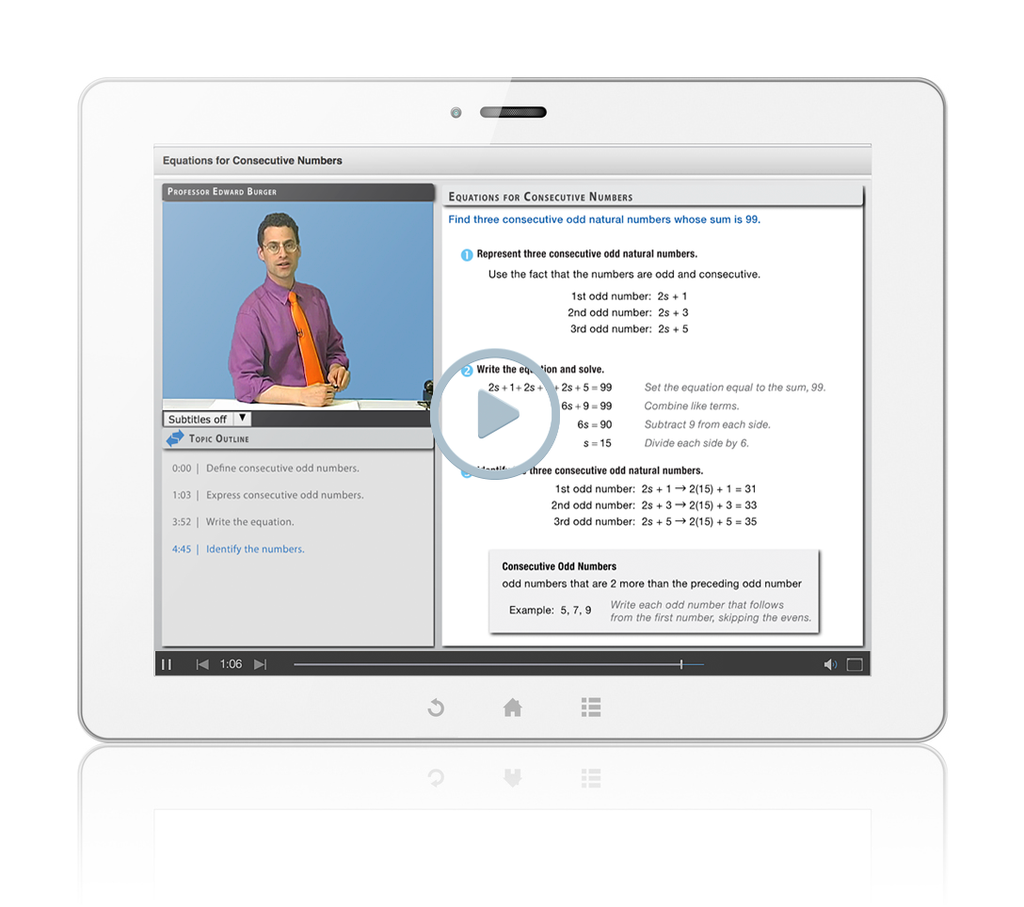
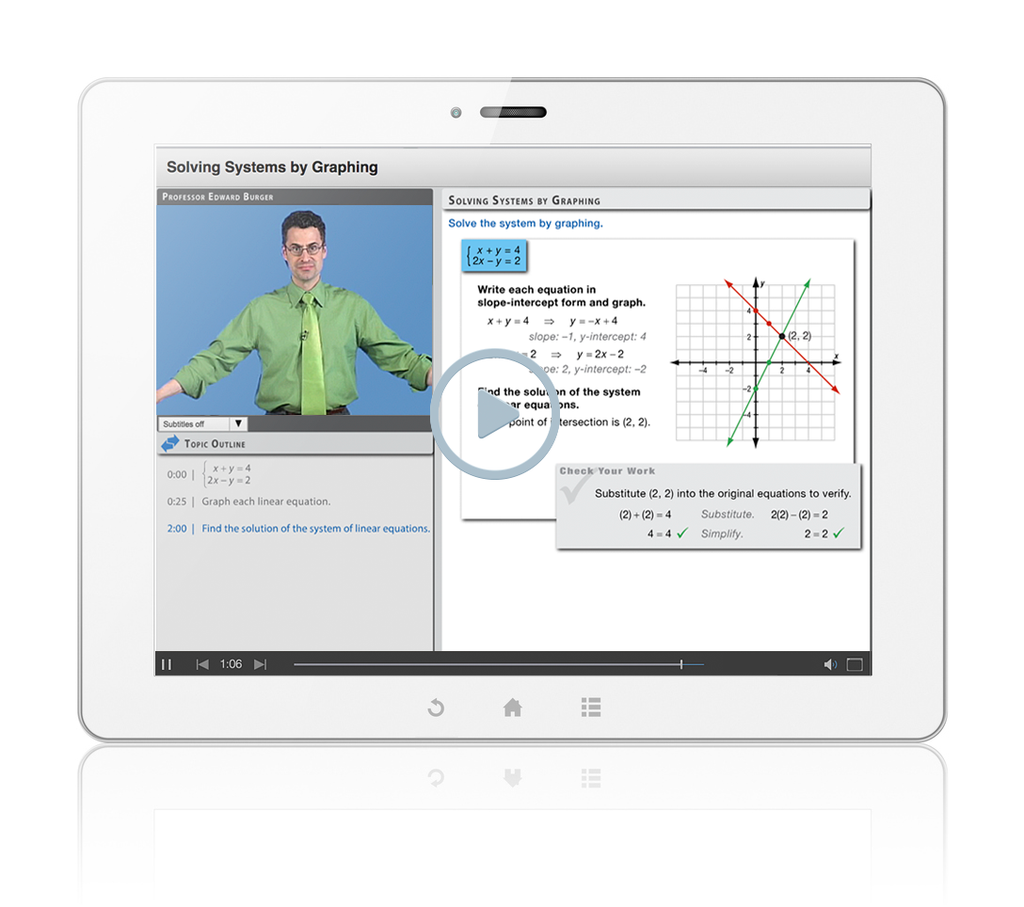
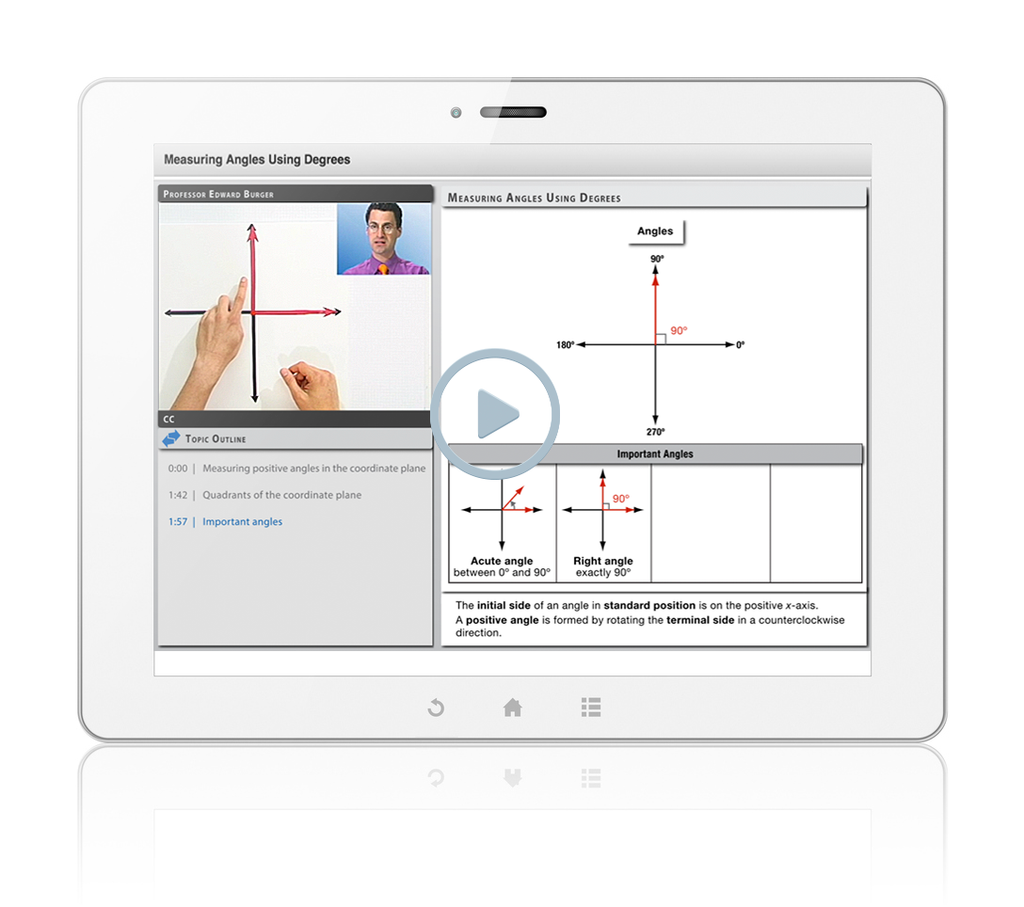
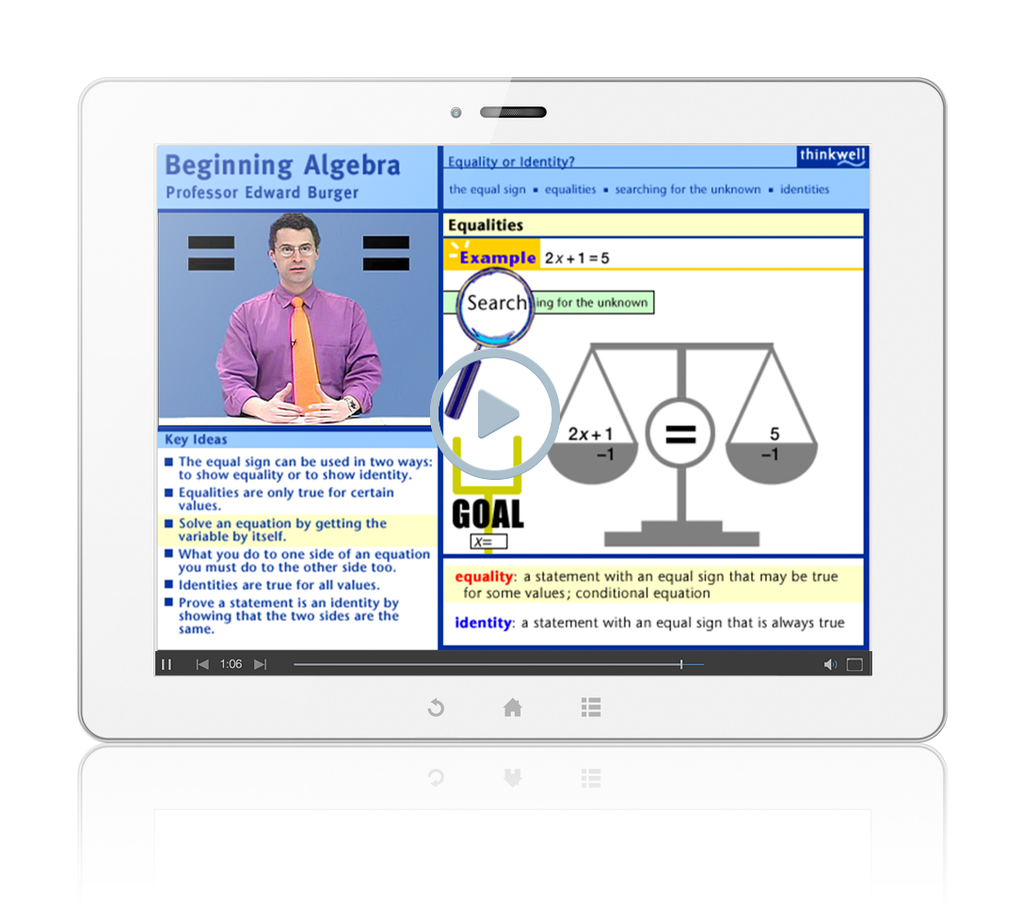
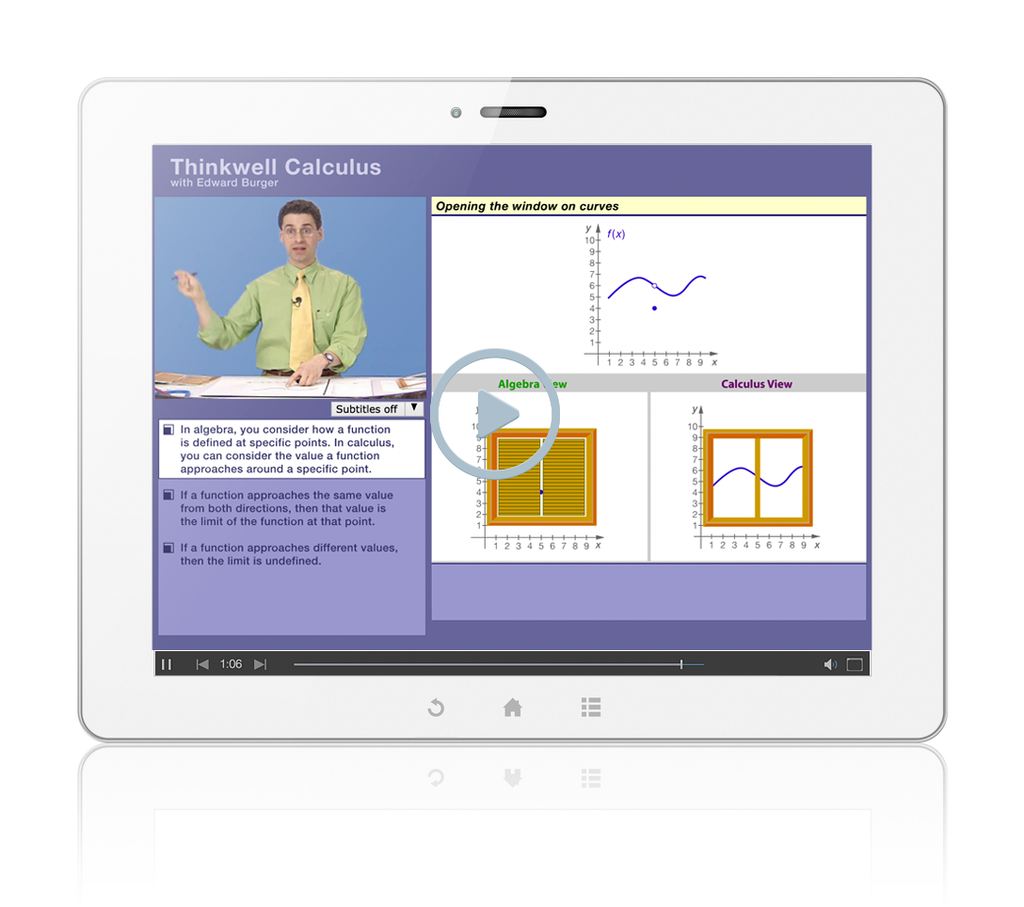
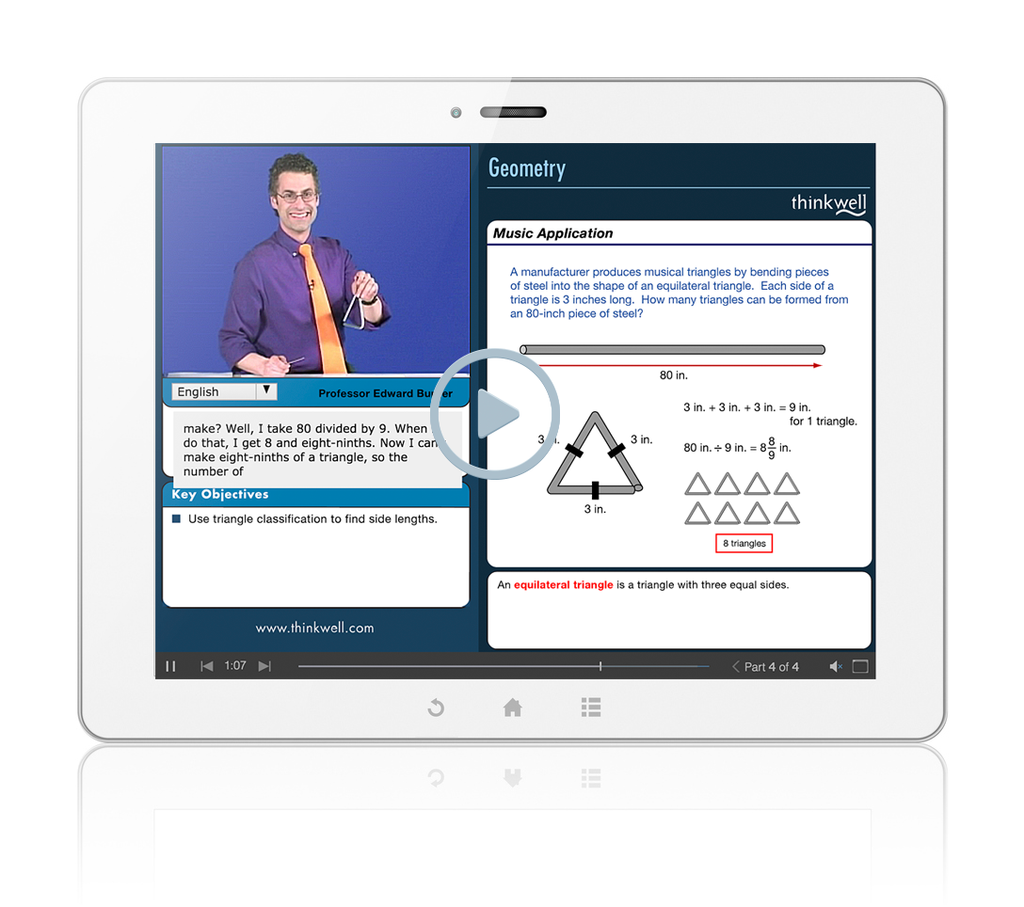
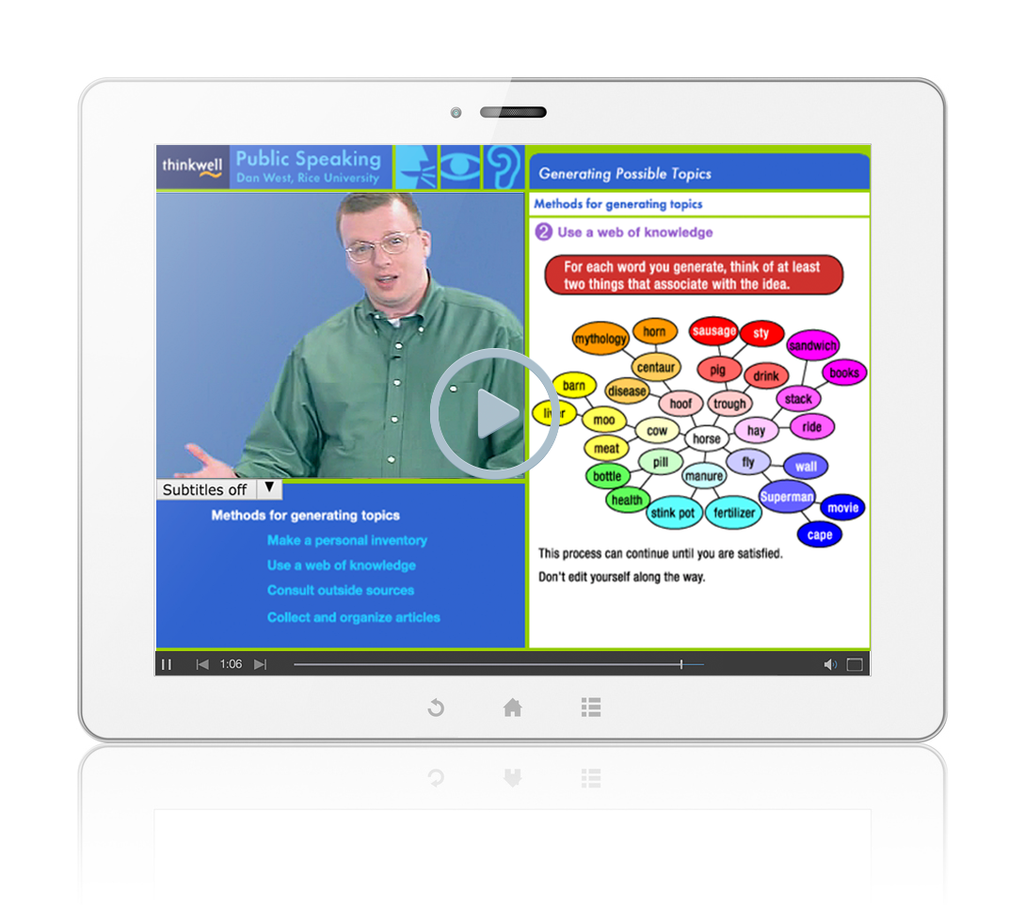
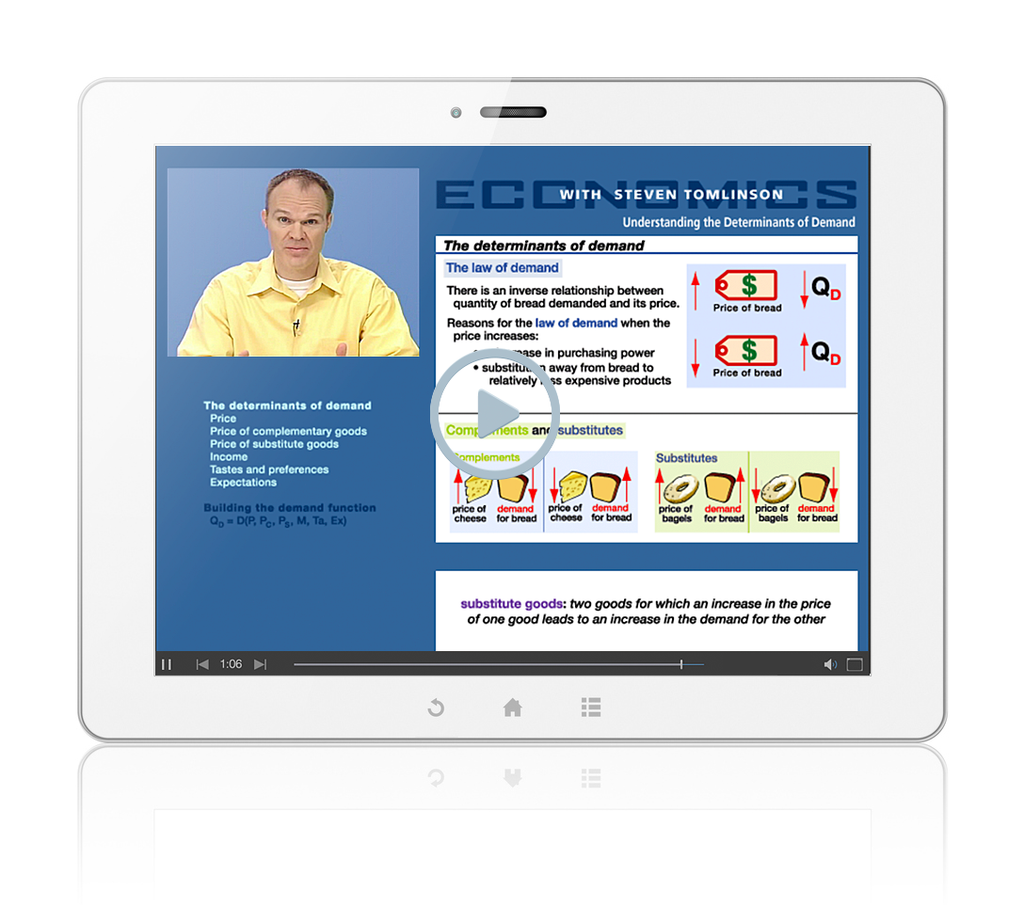
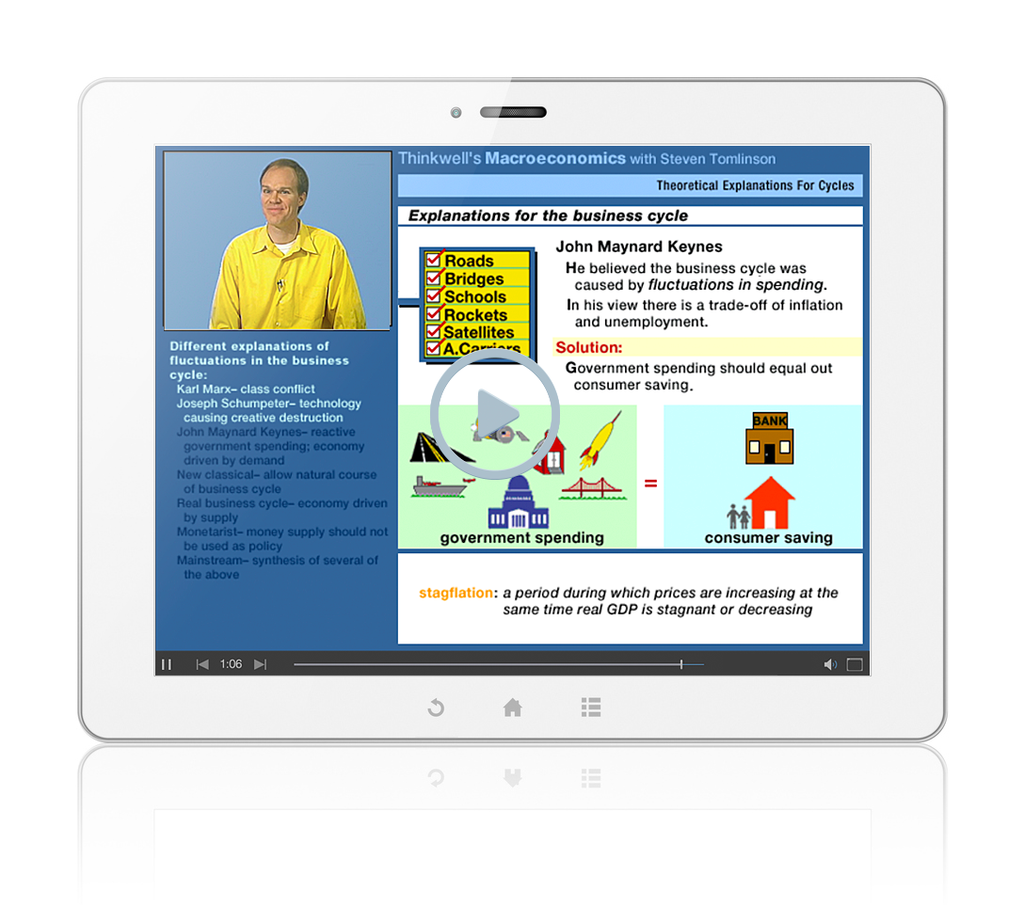
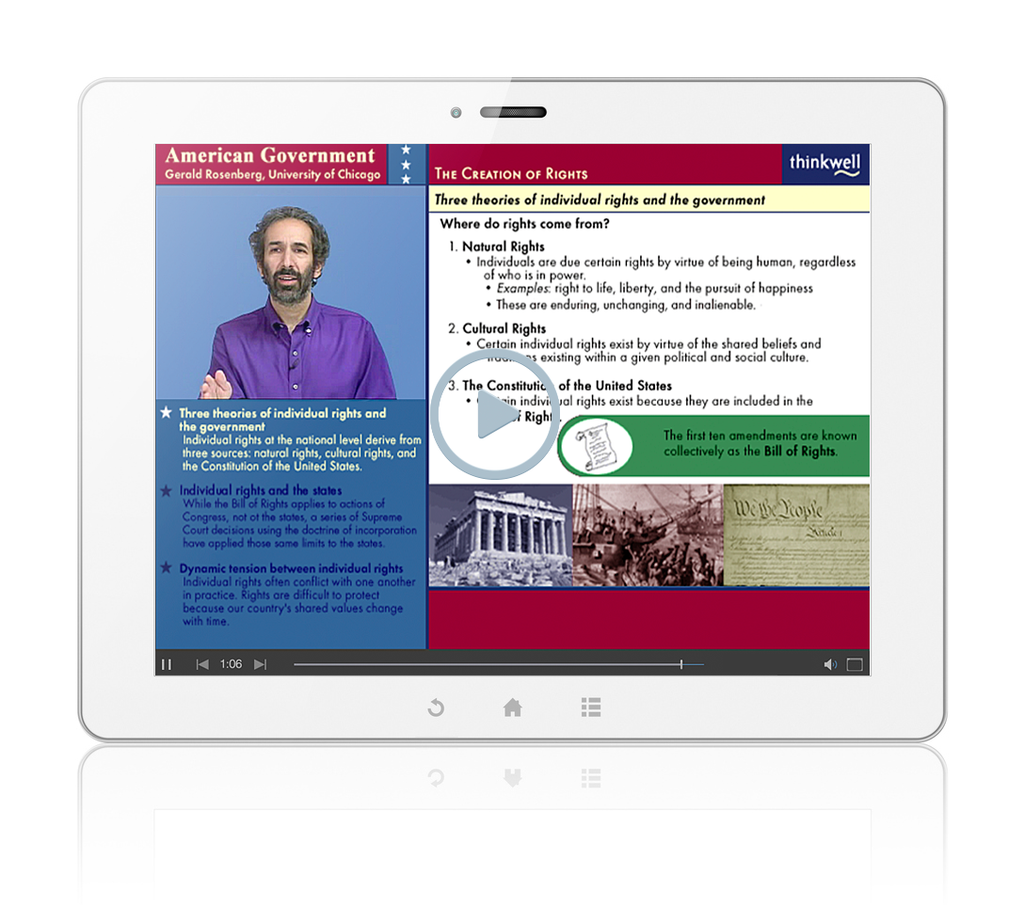
Recently, Education Secretary Arne Duncan described the transition from print to online textbooks as absolutely urgent. "Over the next few years, textbooks should be obsolete," Duncan said. "The world is changing. This has to be where we go as a country."
The education gap continues to widen between students in the U.S. and their peers elsewhere. South Korea, which consistently betters the U.S. in measures of educational outcomes, has embraced digital learning and plans to go fully digital with its textbooks by 2015.
Several states in the U.S. have begun to make digitizing textbooks a priority. Now that all 48 states and D.C. have adopted the Common Core standards (uniform standards for reading and math), it will be easier for states to collaborate in creating online content. This summer, a school district in Huntsville, Alabama, became the first district nationally to attempt to transition completely from print to online textbooks.
Check out Thinkwell's latest online textbook (which also comes in print format), College Algebra.
Here to help me make my debut is my Feline Friend, Chloe! You know we love our Canine Cadets at Thinkwell--you can't go wrong with a puggle snuggle--but some of us are cat people, too!
Colin's Hope, was founded just a few years ago, by the parents of Colin Holst, a lively, energetic boy who drowned in public swimming pool at the age of 4. After dealing with this horrific incident, his parents were shocked to learn that drowning was the number one cause of death for children under the age of 4, and made it their mission to educate others about water safety and drowning prevention.
One of the ways Colin's Hope helps spread the word, is through targeting zip codes throughout the city with the highest risk of drowning rates. Then, packets are distributed to every doorstep, that include safety cards, printed brochures, and healthy snacks. Colin's Hope has seen zip codes with the highest risk, go to zero risk, within a year.
We got together with Alissa Magrum, longtime friend of Thinkwell, and the CEO of Colin's Hope, to learn about this program and stuff over 1,000 packets for distribution. Here are a few pictures we took along the way.
Alissa, giving hope through Colin's Story, teaching us about water safety.
Team Thinkwell, stuffing packets.
Niko, from Tech Support sorting safety cards and arm bands.
To read more about Colin's Hope, Colin's Story, water safety and how you can get involved, check out their website: www.colinshope.org
Kent Fuka is dedicated to STEM education. Not only is he chairman and CFO of Thinkwell, but he's also an advisor for AfterMath Education, a nonprofit group in New Mexico that provides extracurricular STEM education for middle- and high-school students.
Their series of 4-day summer camps is coming up soon, and if you're in the Albuquerque area, we highly recommend checking it out. With a unique blend of traditional teaching techniques, hands-on experiments, and even exercise classes, AfterMath Camp has something to offer every student, from those who struggle with STEM subjects to those who excel. Students who sign up will get to prepare for standardized tests, strengthen STEM skills, and of course, have fun.
For more information on AfterMath, visit their website or contact them.
- - 1 balloon
- - 1 strip of cardboard, about 9" x 3"
- - masking tape
- - colored tissue paper, cut into strips
- - a mix of Elmer's glue and Mod Podge
- - stickers, glitter, etc. (optional)
- - 1 electric candle (a real one might set the lantern on fire)
- string with which to hang the lantern
- 1. Inflate the balloon.
- 2. Shape the cardboard into a circle and tape it to the bottom of the balloon to form a base.
- 3. Cover the balloon with 5 layers of papier-mâché, using the colored tissue paper and glue. Don't forget to cover the cardboard base.
- 4. Decorate.
- 5. The next day, when the papier-mâché is dry, pop the balloon.
- 6. Place the electric candle in the balloon and hang it upside down, using tape or a hole punch to attach the string to the cardboard base.
For many bright students, making a mistake on a homework assignment or test is one of the worst feelings in the world. But could mistakes play a vital role in the learning process? According to a growing number of educators, the answer is yes.
In his book Teach Like
a Champion, Doug Lemov says, "Error followed by correction and instruction is
the fundamental process of schooling...teachers should normalize error and
respond to both parts of this sequence as if they were totally and completely
normal. After all, they are." Lemov isn't the only one who sees failure as an
integral part of education. In their excerpt of his book,
website Delancey Place notes that his philosophy reminds them of the motto of
the engineering department at "the Franklin Institute's nationally recognized
Science Leadership Academy": Fail early, fail often.
Even the New York Times is reconsidering
the value of failure. In an article
on the effectiveness of homework, author Annie Murphy Paul writes, "When we work
hard to understand information, we recall it better; the extra effort signals
the brain that this knowledge is worth keeping. This phenomenon, known as
cognitive disfluency, promotes learning so effectively that psychologists have
devised all manner of 'desirable difficulties' to introduce into the learning
process: for example, sprinkling a passage with punctuation mistakes..." Making
and then correcting errors may be akin to those "desirable difficulties," the
struggle ultimately heightening students' ability to grasp a given concept.
We at Thinkwell are no strangers to this approach to learning. In fact, Professor Edward Burger, the star of Thinkwell's math lectures, considers it one of the most valuable parts of the educational process. "In all my courses," he says, "I emphasize the power of failure: learning from failed attempts and taking risks." In The Heart of Mathematics, the textbook Prof. Burger coauthored, the second item in his list of the top ten mathematical ways of thinking is "Make mistakes and fail but never give up."
How have you and your students approached errors and failure? Do you view them as obstacles to success or as stepping-stones on your way to mastering a subject? Have you found any techniques particularly helpful in learning to view mistakes as a good thing?
For example, once you get back from trick-or-treating with a bucket full of loot, you can use the candy for math lessons. For younger kids, Surf Net Parents has some sorting and estimating activities, while older students can learn about calorie content and graphing with these exercises from Education.com.
If it's science lessons you're looking for, check out these awesome candy experiments--you can use your Halloween spoils to learn about density, pH, and more! Red, White & Grew also has some anatomy activities that go perfectly with all the spooky skeletons and fake blood on October 31.
What better way to study literature on Halloween than to read Washington Irving's classic short story "The Legend of Sleepy Hollow"? This Red, White & Grew post links to the original version, a children's adaptation, and Disney's take on it (something for all ages!), while Connect the Thoughts has a Washington Irving literary guide on sale for the Halloween season.
The holiday also offers a great opportunity to learn about other cultures. This infographic details spooky superstitions from around the world, while this Soul Travelers 3 post discusses Halloween celebrations in different countries. And of course, the day after Halloween is DÃa de los Muertos, or Day of the Dead, which you can learn more about here.
And a good old-fashioned Halloween lapbook ties it all together.
How do you plan to homeschool this Halloween? What are your favorite homeschooling ideas from Halloweens past? Let us know in the comments!
Last Friday, Thinkwell got the opportunity to give back to our community through the Entrepreneur's Foundation's annual Fall Service Day. This year, over 500 volunteers from almost two dozen companies came to Austin's Zilker Park to build park benches, weed out invasive plant species, plant wildflowers, and much more.
Thinkwell volunteers were assigned to the Rattlesnake Team, which meant that we got to help clean up the Umlauf Sculpture Garden. The Sculpture Garden is apart from the rest of Zilker in a shady grove full of compelling artwork and verdant plant life--in short, you'd be hard-pressed to think of a more beautiful place to spend the day raking leaves and clearing debris from pathways to make them more wheelchair-accessible.
At lunch, a series of speakers from Austin's Parks and Recreation department taught us about the park's importance. From hosting festivals like Austin City Limits to helping preserve the habitat of the Barton Springs salamander, Zilker plays many roles in the community--plus the playgrounds and swimming areas make it a fantastic place for kids! Thinkwell is proud to have played our part in keeping Zilker Park and the city of Austin beautiful.
Photo courtesy of Umlauf Sculpture Garden website.


Recent Comments